Furniture Leveling Feet
Furniture leveling feet stop wobbly tables and uneven shelves for good. Learn how to pick the right size, install them, and which materials last the longest.


By Youpin Hardware Team
By Youpin Hardware Team
We have all been there. You set a glass on the table, and it slides to one corner. You open a cabinet door, and the whole unit rocks forward. The floor is not flat — and your furniture pays the price.
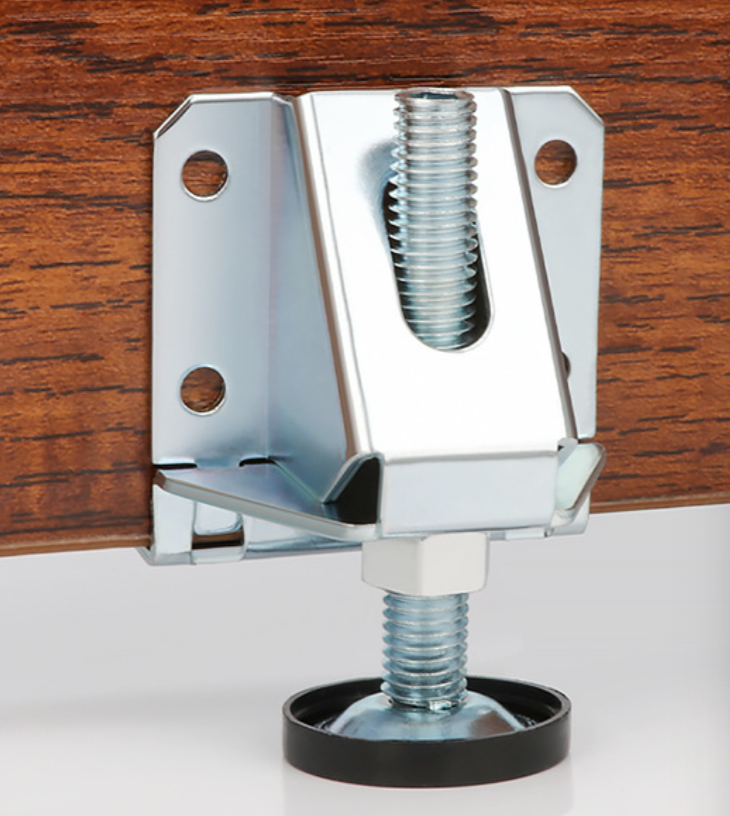
The fix is not new flooring. It is a set of furniture leveling feet. These small adjustable mounts sit at the bottom of table legs, cabinet bases, shelving units, and workbenches. A threaded screw lets you raise or lower each foot independently, so every corner sits solid on the ground regardless of how uneven the floor is.
If you are already shopping for a fix, check our Adjustable Furniture Leveling Foot for square tube legs, or keep reading to learn how to pick the right type for your project.
Why Furniture Wobbles
Most wobble comes from three sources:
Uneven floors. Concrete, tile, and old wood floors all have highs and lows. Even a 2mm difference across a table base is enough to make it rock.
Leg wear. Furniture legs wear down at different rates. A chair dragged across a tile floor for two years will have one leg shorter than the rest.
Tube leg design. Square tube legs — common on workbenches, shop tables, and metal cabinets — come with open bottoms. Without a leveling foot, the raw tube edge sits directly on the floor, scratching it and offering no adjustment.
Leveling feet solve all three. The screw thread gives you several millimeters of vertical adjustment, and the base pad grips the floor instead of scratching it.
Types of Leveling Feet
Adjustable Furniture Leveling Foot
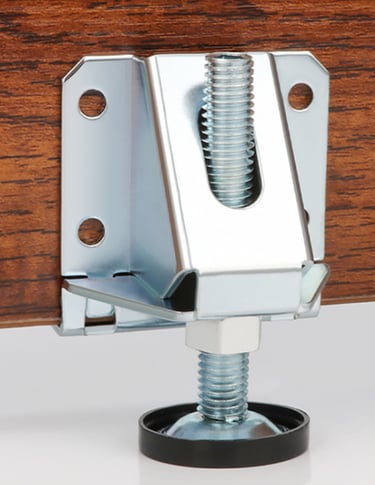
This is our standard adjustable foot, designed for square tube legs. The mounting plate slides into the bottom of the tube and secures with screws. A threaded bolt runs through the center, and you turn the foot pad to adjust height.
Best for: Workbenches, shop tables, metal cabinets, display units with square tube legs.
Key specs:
Fits standard square tube legs (check your tube's inner dimension)
Screw-in height adjustment — typically 15-25mm of travel
Non-slip rubber or plastic base pad
Mounting brackets included
Furniture Leveling Feet Set
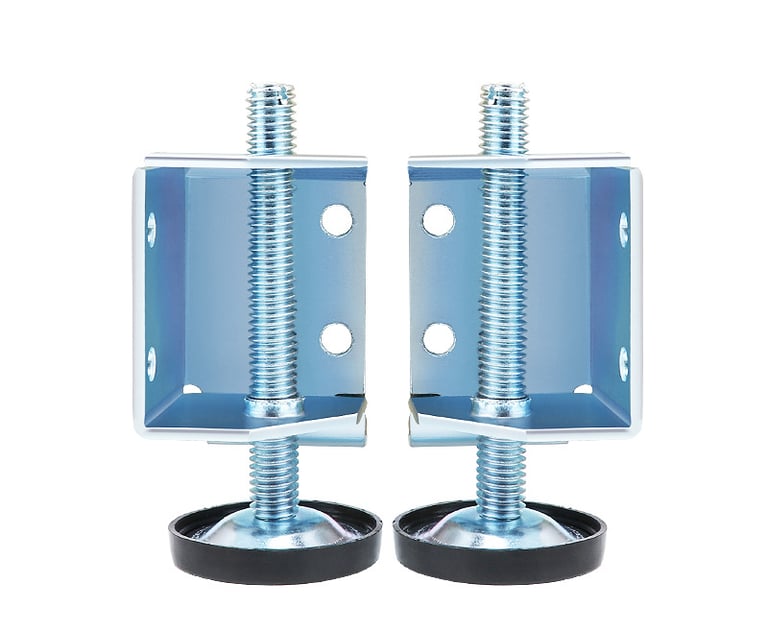
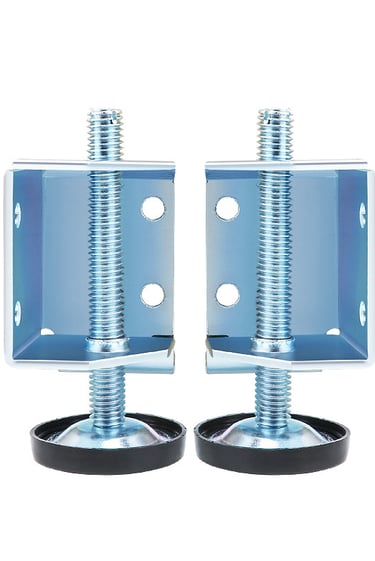
This is a multi-piece set, ideal if you are outfitting several pieces of furniture at once or replacing all four feet on a single unit. Buying as a set keeps the parts consistent — same thread pitch, same pad diameter, same height range — so all four corners adjust evenly.
See our Furniture Leveling Feet Set for bulk purchase options and full spec details.
Best for: Kitchen cabinet makeovers, wardrobe leveling, replacing a full set of worn-out feet.
Key specs:
Set of 4 (or more) matching feet
Consistent thread and pad across all pieces
Adjustable height range
Durable metal thread with non-marking base
How to Measure for the Right Fit
Getting the right leveling foot comes down to three measurements:
1. Tube Inner Dimension
If your furniture has square tube legs, measure the inside width of the tube. This determines which mounting plate will fit. Common sizes are 25mm, 30mm, and 38mm square tubes.
2. Pad Diameter
The wider the pad, the more stable the furniture. For heavy workbenches, look for 30-50mm pads. For lighter cabinets, 20-25mm is enough. Too wide and the foot sticks out past the leg — too narrow and the furniture can tip.
3. Height Range
Check how much adjustment you need. If your floor is off by 5mm, any foot will do. If you need 15-20mm of correction, make sure the thread is long enough to cover that range with room to spare.
Installation: Step by Step
For Tube Leg Furniture
Flip the furniture. Lay it on its side on a soft surface to avoid scratching.
Check the tube bottom. If there is a plastic plug or cap, remove it. Clean out any debris.
Insert the mounting plate. Slide it into the tube opening. It should fit snugly — if it is loose, you may have the wrong size.
Secure with screws. Drive the included screws through the mounting plate holes into the tube wall. Usually 2-4 screws per foot.
Screw in the foot. Thread the adjustable foot into the mounting plate. Do not fully tighten yet.
Repeat for all legs. Install a foot on each leg before flipping the furniture back.
Level it. Set the furniture upright on the floor. Use a small bubble level on the table surface. Turn each foot clockwise or counter-clockwise to raise or lower that corner until the furniture sits solid with no wobble.
For Cabinet Feet with Threaded Inserts
Some cabinets come with threaded inserts already in the base. In that case, you simply screw the leveling foot directly into the insert — no mounting plate needed. Check the thread size (M8 and M10 are most common) before ordering.
Common Mistakes to Avoid
Buying feet that are too small. A 15mm pad on a heavy workbench will dent into soft flooring and may not support the weight. Match the pad size to the furniture weight.
Forgetting to check the thread direction. Most feet raise when turned clockwise. But some — especially imported parts — reverse this. Check before you install all four.
Over-tightening one foot. If one corner is too high, the opposite corner lifts off the ground. Adjust in small turns, checking the level after each.
Ignoring the pad material. Rubber pads grip well on tile and wood but can mark some surfaces. Felt pads are softer but slide more. Plastic pads are durable but can scratch delicate flooring. Pick the pad that matches your floor.
What About Kitchen Cabinets?
Kitchen base cabinets are a special case. Most are installed on adjustable legs that came with the cabinet system. If those legs break or strip, you need replacements that match the original thread and mounting style.
Our furniture leveling feet work for free-standing cabinets and units where you have access to the leg base. For built-in kitchen cabinets, check whether the leg uses a standard M8 or M10 thread — if so, the foot pad can be replaced without changing the whole leg.
Material and Durability
The two parts of a leveling foot — the threaded bolt and the base pad — take different stresses:
Threaded bolt: Takes the vertical load. Needs to be steel, not aluminum, for anything heavier than a small shelf. Our feet use zinc-plated steel threads for corrosion resistance.
Base pad: Takes the floor contact. Rubber is standard. Some feet use a hard plastic cap under the rubber for rigidity.
A good leveling foot should last years without stripping or cracking. If the thread feels loose after a few adjustments, the nut inside the mounting plate has worn — replace the foot rather than tightening harder.
Quick Checklist Before You Buy
Measure your tube inner dimension (or confirm thread size for insert-type)
Know your furniture weight — heavier needs wider pads
Check how much height adjustment you need
Count how many feet you need (most furniture uses 4)
Pick a pad material that matches your floor type
Need Help Choosing?
Every furniture setup is a little different. If you are not sure which size or type fits your project, send us your measurements and we will point you to the right product. Browse our full hardware collection or contact us directly — we answer fast.