How to Restore Old Cabinet Furniture with Antique Hardware
Learn how to restore old cabinet furniture with antique handles and corner brackets. A step-by-step guide for replacing old hardware and reinforcing joints.
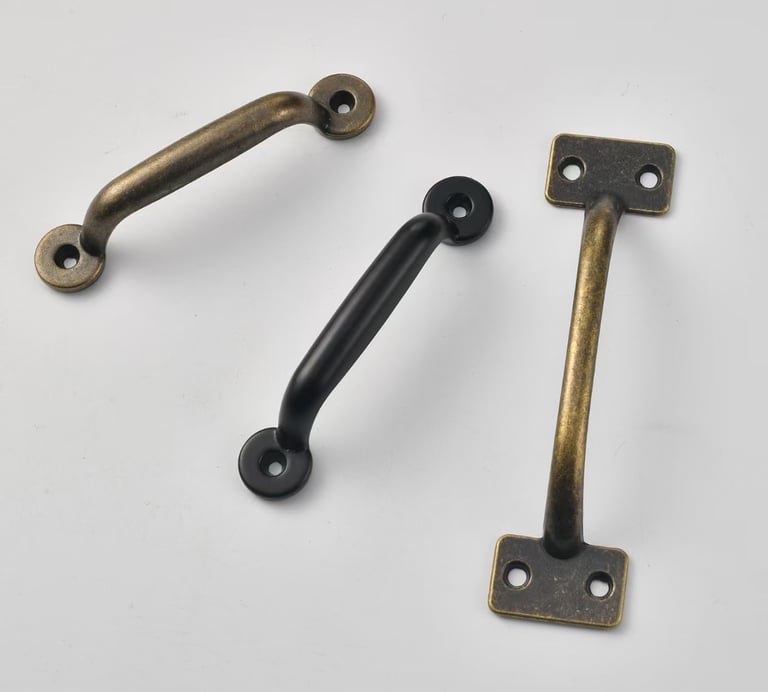
If you have ever inherited an old cabinet or picked one up from a flea market, you know the situation. The wood is solid. The proportions feel right. But the handles are corroded or missing, and the corner joints creak every time you open the door. The bones are good. The hardware is not.
Most people either live with a wobbly cabinet or throw it out. Neither is a great option. The truth is, with a couple of replacement parts and maybe an hour of work, you can bring that piece back to life. This guide covers the two fixes that make the biggest difference: swapping out old handles and reinforcing weak corner joints.
Replacing Worn Handles with Antique-Style Hardware
The handle is the first thing anyone touches on a cabinet. It is also the part that takes the most abuse. Decades of pulling, sweating, and temperature swings leave most original handles either pitted with corrosion or snapped clean off.
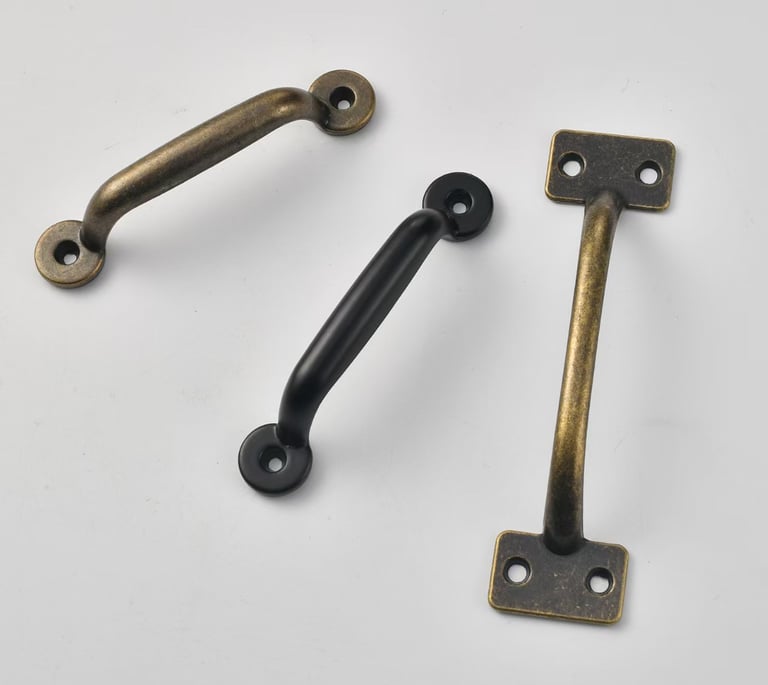
When you are shopping for replacements, zinc alloy handles with an antique bronze finish are worth considering. They hold up well to daily use, and the distressed surface blends in with older furniture instead of looking like a shiny new bolt on a hundred-year-old door. A standard replacement handle has two mounting plates with pre-drilled holes, connected by an arched grip. The measurements that matter are the hole spacing, usually around 97mm center to center, and the overall length, which runs about 115mm for a typical cabinet door.
Mounting is simple. Unscrew the old hardware, clean out the holes, and attach the new handle using the existing mounting points. If the old screw holes are stripped, fill them with wood filler, let it set overnight, and drill fresh pilot holes the next day. One thing I have learned the hard way: do not crank the screws down as hard as you can. Zinc alloy is tough, but it is not steel. Tighten until the plate sits flat, then a quarter turn more. That is enough.
If you are sourcing parts for a batch of cabinets, an antique cabinet handle from a factory-direct supplier will save you a lot compared to retail. The finish is consistent across batches, which matters when you are doing a whole room.
Reinforcing Corner Joints with Metal Brackets
Handles are the part people see. But the real structural problem with old cabinets is almost always the joints. Wood dries out over the years. Old glue lets go. Screws back themselves out. The result is a cabinet that racks sideways when you pull the door open.
Corner brackets fix this by locking the joint at 90 degrees. The principle is basic: a triangle is the most rigid shape in construction. When you bolt a bracket across a corner, the load goes through the metal instead of stressing the wood. It turns a wobbly joint into a solid one.
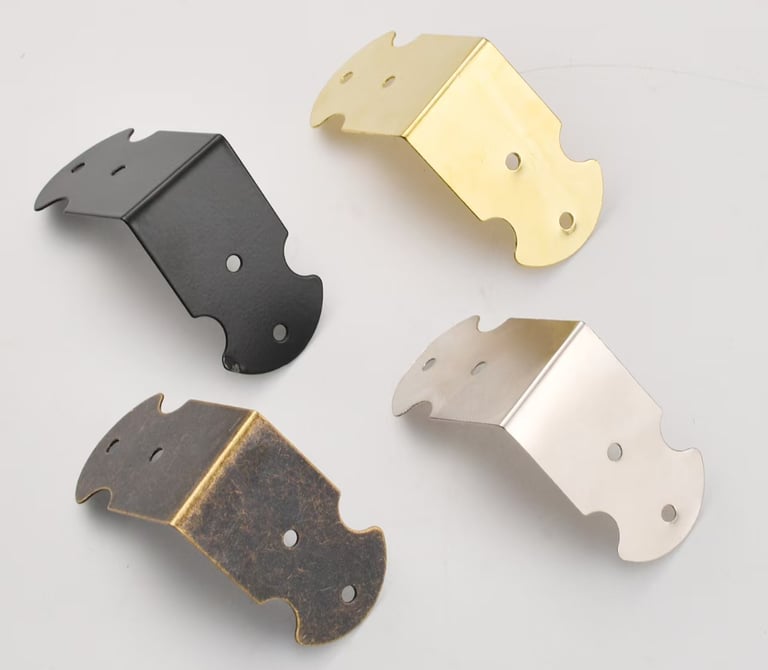
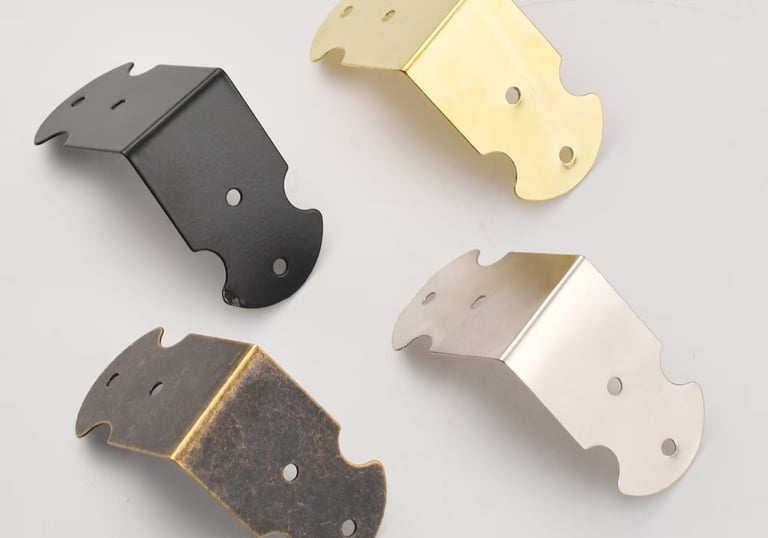
Decorative brackets come in a few different finishes. Matte black is the most common for modern furniture. Antique bronze matches older pieces. Polished gold and bright silver are options if you want the hardware to stand out. The bracket itself is a thin metal plate bent at a right angle, with mounting holes on each side. Some have a bat-like shape that adds a bit of character while still doing the structural work.
Installing decorative corner brackets is not complicated, but it does take some care. Start by cleaning the corner where the two panels meet. Hold the bracket in place and mark the screw holes with a pencil. Then pre-drill. This step matters more than people think. If you skip the pilot holes and drive screws straight into hardwood, the wood can split right at the corner, which is the worst place for a crack.
Use screws that are long enough to grip but not so long that they come through the other side of the panel. For a typical cabinet made of 18mm board, 16mm screws are about right. Tighten them in a cross pattern if the bracket has four holes, the same way you would tighten lug nuts on a wheel. It keeps the bracket sitting flat instead of rocking.
For a standard cabinet, brackets on the top two corners will handle most of the load. If the cabinet is tall or holds heavy items like dishes or tools, add brackets to the bottom corners as well. Four brackets will make even a loose old cabinet feel like it was built last week.
Maintenance Tips After Installation
Once the new handles and brackets are on, a bit of upkeep will keep them working for years. For zinc alloy hardware with an antique finish, wipe it down with a dry cloth every few months. Skip the water and chemical cleaners. They strip the patina and leave the metal looking patchy.
If the hardware starts to look dull, a thin coat of beeswax will bring back the shine without changing the color. Rub a small amount on with a soft cloth, wait a few minutes, then buff it out. The wax also creates a barrier against moisture, which is the main thing that corrodes zinc alloy over time.
For the corner brackets, check the screws every six months or so. Wood moves with humidity. In the summer it swells. In the winter it shrinks. Screws loosen as the wood around them changes shape. A quick pass with a screwdriver takes about ten seconds per bracket and saves you from finding out a joint has failed when a shelf full of dishes comes crashing down at two in the morning.
Sourcing Hardware for Larger Projects
A single cabinet is a weekend project. But if you are a contractor renovating an apartment complex, or a furniture restorer working through a batch of pieces, retail hardware gets expensive fast. The same handle that costs six dollars at a hardware store can be had for a fraction of that from a factory that specializes in vintage-style hardware.
The same goes for corner brackets. Buying in bulk from a supplier means consistent finish, uniform dimensions, and enough screws in the package to actually finish the job without a second trip to the store.
If you are dealing with unusual dimensions, custom finishes, or just need help figuring out what parts fit your project, it is worth taking a minute to contact us contact-youpin-hardware】 before you order. A quick conversation about your cabinet type, wood thickness, and finish preference can save you from ordering the wrong parts and waiting two weeks for a replacement shipment.
uick Reference Checklist
- Measure the hole spacing on your cabinet before ordering handles. 97mm is common, but older furniture can be all over the place.
- Match the finish to the wood. Antique bronze for dark woods, silver or gold for lighter tones.
- Pre-drill every screw hole. It takes an extra minute and prevents splitting.
- Tighten by hand, not with a power drill on max torque.
- Check the brackets every six months. Wood moves, screws loosen.
- Order 10 percent more than you need. You will drop one, strip one, or find a cabinet you forgot about.
FAQ:
Q: Can I use zinc alloy handles on outdoor cabinets?
Not really. Zinc alloy holds up fine indoors, but outside it will corrode faster than stainless steel or brass. If your cabinet sits on a porch or in a garage with humidity, look for stainless steel hardware instead.
Q: How many corner brackets does one cabinet need?
Two on the top corners will handle most standard cabinets. If the cabinet is tall, heavy, or gets opened constantly, add two more on the bottom. Four brackets cost about two dollars and add years to the furniture.
Q: Do I need to remove the old finish before installing new handles?
No. Just make sure the surface is clean and dry. If the old finish is flaking, scrape off the loose bits around the mounting area so the new handle plate sits flat.